
Insulating Sayreville NJ Capes Against River Wind, Damp, and Heat Loss
Cape Housing and Sayreville's Specific Heat-Loss Pattern
Cape housing built in the postwar boom defines the older sections of Sayreville, particularly Parlin, Melrose, and the streets running off Washington Road. These homes share a framing pattern that fails on three fronts the moment winter arrives. Knee walls run unsealed behind small access doors, half-story bedrooms operate as their own miniature heat-loss zones, and the attic floor batts settled into compressed pads decades ago. Add the Raritan River frontage on the east side of the township, Cheesequake State Park to the south, and the South River corridor exposure, and the climate load on this housing stock is genuinely heavier than the regional satellite contractors acknowledge when they quote work over the phone. Owners across Sayreville feel the failure pattern as upper bedrooms that cannot hold seventy degrees in January, second floor rooms that run hot in August, and gas or oil bills that climb every year despite thermostat discipline. Spray foam at the right density and thickness corrects each of those failures specifically. Closed cell at the roof deck closes the half-story bedroom heat loss. Open or closed cell at knee walls ends the kneewall leak. Rim joist foam stops the basement perimeter air infiltration that pulls cold into first floor rooms.
Riverfront Exposure and Sayreville Foam Selection
Properties along the Raritan River side of Sayreville carry a different envelope load than the inland subdivisions across the township, and the foam selection has to follow that exposure carefully. Closed cell foam at the rim joist, basement walls, and any below grade assembly handles the higher vapor pressure that comes with river frontage and seasonal high water events. For finished bonus rooms above garages, which are common in the 1990s and 2000s subdivisions off Ernston Road, closed cell at the cantilevered floor plus the garage ceiling converts a freezing winter space into a year round usable room. Older Sayreville Capes in Parlin and Melrose run a different scope altogether. Hot roof conversions, knee wall foam, and full attic encapsulation usually deliver the largest comfort gain per dollar spent on the house. Every scope ties to NJ residential energy code under the 2018 IECC with NJ amendments, every install pulls permits through the Sayreville construction office, and federal 25C credit paperwork goes home with the homeowner the day final inspection signs off on the assembly. Bilingual project conversations are available where the household prefers Spanish over English, which holds for a meaningful share of households across the older sections of the township.
Closed-Cell Foam for Sayreville Postwar Capes
Closed cell spray foam fits postwar Cape Cod assemblies in Sayreville almost without exception. Rim joists, knee walls, basement perimeters, and roof decks above finished half-story bedrooms all benefit from the air and vapor barrier that closed cell delivers in a single pass. Density runs near two pounds per cubic foot with R value around seven per inch, which means three inches on a Cape roof deck hits roughly R 21 with a true air barrier built into the assembly, and adds racking rigidity to the older framing that decades of settling have loosened. The chemistry handles vapor differently than fiberglass or cellulose in the same cavity, which matters on Cape attics where summer humidity drives moisture into the attic floor and winter heat loss pulls vapor up through the same path. Closed cell does not absorb that vapor, does not feed mold, and does not lose R value over time. Every install gets spec'd against NJ Climate Zone 4A code, paired with the appropriate ignition barrier where code applies, and documented for federal 25C credit filing as part of the scope. When closed cell is the wrong call for a specific assembly, we will price the open cell or hybrid option instead rather than oversell the denser product.
Basement Spray Foam for Sayreville Riverfront Homes
Basement spray foam in Sayreville does two jobs at once on most homes. First, the rim joist and band assembly gets two inches of closed cell foam at every bay, closing the single largest air leak in any pre-1990 home. Second, the foundation walls themselves get a closed cell layer that converts the basement perimeter into a conditioned, vapor managed assembly. On Raritan River side properties, that combination tolerates the occasional high water event without losing R value, growing mold, or requiring full removal the way fiberglass would. Where the basement is finished or planned for finishing, the full perimeter foam strategy creates a conditioned room that performs like the rest of the house. Where the basement stays unfinished and used for storage, an intumescent coating over the foam usually satisfies NJ residential energy code without the cost of full drywall coverage. Dehumidification gets sized to the conditioned volume on homes where the water table or river proximity demand it, with drain tile and sump assemblies verified before any foam goes down. Vapor retarder placement, fire blocking at the rim, and interior drainage paths all get documented in the scope so the assembly reads correctly during inspection. Permits run through the Sayreville construction office, inspections coordinate with Middlesex County, and the homeowner gets a paper trail that supports both the manufacturer warranty and the federal 25C credit filing.
Attic Spray Foam for Sayreville Half-Story Cape Conversions
Attic foam on a Sayreville Cape almost always points to a hot roof conversion when the half-story is finished or finishable. Closed cell foam goes onto the roof deck at three to four inches, knee walls get sealed and insulated as part of the conditioned envelope, and the half-story bedrooms come fully into the same comfort range as the rest of the home. Ridge venting either gets closed off or rebalanced based on the assembly design, and the new envelope holds heat overnight without the kind of bedroom temperature swing that defines an uninsulated Cape upstairs. When the half-story is unfinished and the attic is used for storage, the scope reverses. The attic floor gets sealed with closed or open cell foam at the joists, original batts get evaluated for removal or retention, and the ridge and soffit venting stays open at correct ratios. Attic stair pull-down units, recessed light cans, and bath fan ducts all get air sealed before any new insulation goes down so the assembly performs to spec. Target R value lands at R 49 per NJ Climate Zone 4A code in either scope, the assembly gets documented for the federal 25C credit, and most owners see the comfort difference on the first full heating or cooling cycle after final inspection signs off.
Comprehensive Spray Foam Insulation Services in Perth Amboy
Tailored to Your Needs
Every Perth Amboy spray foam project is matched to the assembly, the climate zone, and the homeowner's actual goals. These are the ten services we run most often across Middlesex County, each with its own technical considerations, code requirements, and rebate angles.

High density foam that stops air, water, and heat loss in one application.
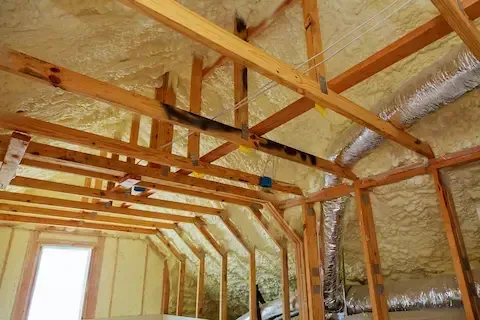
Lighter density foam for interior walls, sound control, and vented attics.
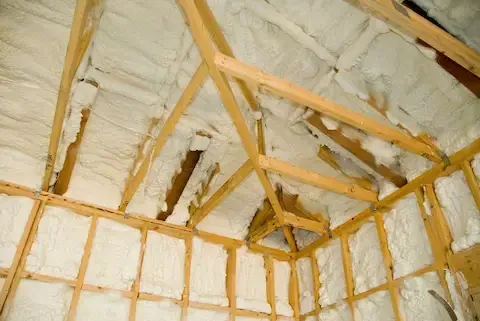
Vented attic floors or hot roof conversions tuned to your home's framing.
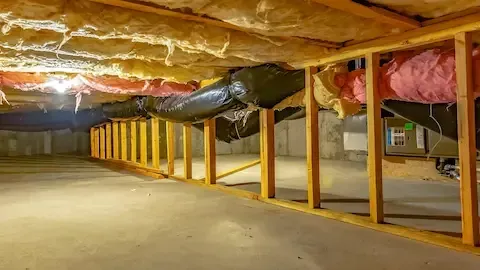
Full crawlspace encapsulation built for Perth Amboy's coastal water table conditions.
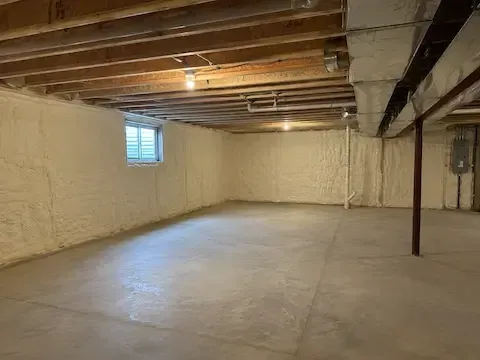
Foundation walls, rim joists, and conditioned basement strategies.
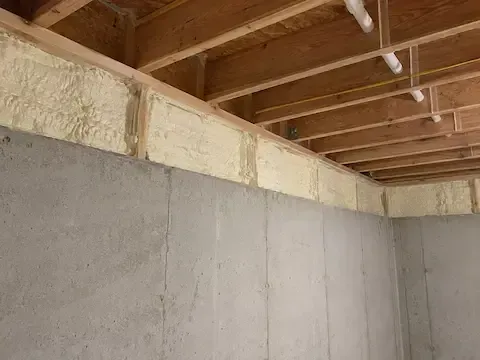
The highest energy ROI upgrade in almost every Perth Amboy basement.
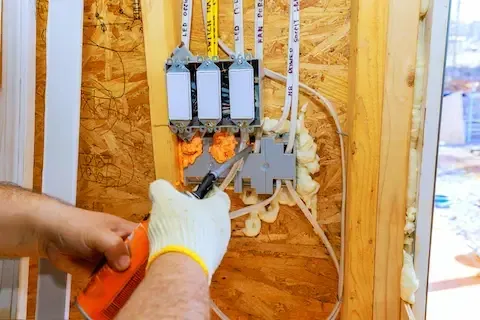
Warehouse, pole barn, and light industrial spray foam at scale.
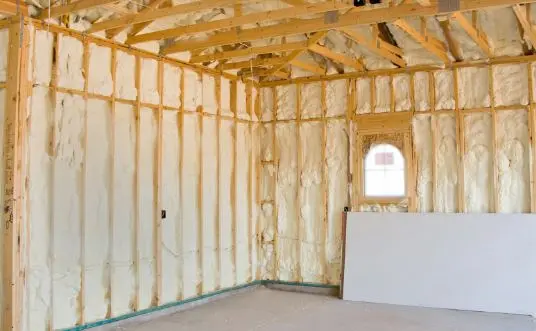
Walls, ceilings, and overhead doors converted to year round comfort.
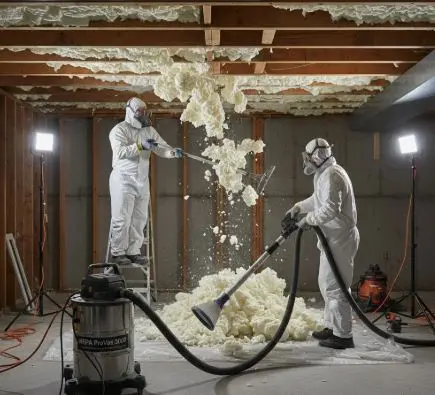
Safe removal of failed, off ratio, or moisture damaged spray foam.
Whole house spray foam built around your home's actual assemblies.
Frequently Asked Questions
Spray Foam Insulation can be complex, and we’re here to provide answers to common questions. Here are some frequently asked questions from our clients.
Frequently Asked Questions about Spray Foam Insulation Perth Amboy
How much does spray foam insulation cost in Perth Amboy?
Most Perth Amboy projects fall between $1.50 and $4.00 per board foot, with closed cell running higher than open cell because of the denser chemistry and higher R value per inch. A 1,500 square foot attic retrofit in a typical Hall Avenue or State Street home usually lands between $4,500 and $9,000 depending on access, prep, and the assembly type. We give every Perth Amboy homeowner a written, line itemized scope after an in person walk through, so the number you see is the number you pay.
Should I pick closed cell or open cell spray foam for my Perth Amboy home?
Closed cell is the right pick for any Perth Amboy assembly that touches moisture risk, which is most of them given how close most of the city sits to the Raritan River and Raritan Bay. That means crawlspaces, rim joists, basement walls, and any roof deck application below grade or near water. Open cell works well for interior partition walls, sound dampening between bedrooms, and vented attic scenarios where vapor permeability is acceptable. We will recommend the right chemistry for each assembly rather than defaulting to whatever the truck is already loaded with.
Will spray foam pay for itself on a Perth Amboy energy bill?
For most Perth Amboy homes the payback window runs five to nine years on heating dominant assemblies, faster on homes with electric heat or oil heat. PSEG rate increases since 2023 have shortened the payback meaningfully, and the federal 25C tax credit covers up to $1,200 per year on qualifying insulation work. Add the HEAR or HOMES rebate paths for income qualifying households and many Perth Amboy projects effectively net out under three years.
Can spray foam help with the moisture and mold issues in older Perth Amboy basements?
Yes, when the right product goes in the right assembly. Closed cell foam acts as both an air barrier and a vapor retarder, which is exactly what most Perth Amboy basements built before 1950 lack. We commonly install two inches of closed cell on foundation walls and rim joists, paired with a properly graded exterior, dehumidification where the water table demands it, and any code required ignition barrier. We never spray over active water intrusion, so if your basement is wet we will tell you to fix the source first.
Do you handle permits and inspections in Perth Amboy and the rest of Middlesex County?
We pull every required permit through the Perth Amboy Construction Office and coordinate with Middlesex County inspectors directly. NJ residential energy code under the 2018 IECC with NJ amendments governs most spray foam work, and our scopes are written to meet or exceed those R value and air sealing requirements. Older homes in historic adjacent zones sometimes need additional coordination, and we handle that paperwork as part of the job rather than tacking it on as a surprise line item.
Do you offer Spanish language consultations and project walk throughs?
Absolutely. About half of Perth Amboy speaks Spanish at home, and our project conversations happen in whichever language makes the homeowner most comfortable. We provide bilingual written scopes, bilingual rebate paperwork, and crew leads who can walk a Spanish speaking homeowner through every step of the job from prep to cure. Llámenos en español cuando quiera. No translation tools, no awkward middlemen, just direct conversation about your home.
Need Spray Foam Insulation?
What Our Satisfied Clients Have to Say About Perth Amboy Spray Foam Insulation
We pride ourselves on delivering great results and experiences for each client. Hear directly from home and business owners who’ve trusted us with their Spray Foam Insulation needs.

Our 1920s home off State Street was unlivable in February. After they sealed the attic and rim joists with closed cell foam, the second floor finally holds heat overnight. Crew was on time, cleaned up every day, and the bilingual walk through made my mother in law feel completely comfortable with the work.
Maria Gonzalez, Perth Amboy NJ
I run a small warehouse off the industrial corridor and the heating bills were eating our margins. They scoped a commercial spray foam job that fit our budget and our schedule, and the inspector signed off the first time through. Three winters in and the energy savings are exactly what they projected on paper.
David Patel, Edison NJ
We had water in the crawlspace every spring. Their team fixed the grading issue first, then encapsulated with a vapor barrier and closed cell foam. No more musty smell, no more mold worry, and the upstairs floors are warm under bare feet for the first time since we bought the place.
Carmen Rivera, New Brunswick NJ
The Trusted Spray Foam Insulation Expert Near You
Ready to hear more about expert services at Perth Amboy Spray Foam Insulation?
Contact us today to receive a detailed, no-obligation quote.

Mon-Fri, 8am-5pm
